Powerlifting attempt planner
Enter the third attempt you plan to take and get an opener and second attempt to match. Choose a standard, conservative or aggressive plan and print the card.
Your squat attempts
Opener
370 lb
About 91% of your planned third
Plates per side on a 45 lb bar
45 x 3, 25, 2.5
Competition lifters made this attempt 88% of the time.
Second
385 lb
About 95% of your planned third
Plates per side on a 45 lb bar
45 x 3, 35
Competition lifters made this attempt 84% of the time.
Third
405 lb
Your planned third
Plates per side on a 45 lb bar
45 x 4
Competition lifters made this attempt 66% of the time.
Enter your planned third attempt to see your plan.
Success rates are for raw competition lifters in all federations, built from OpenPowerlifting data. Third attempts miss most often, so plan the third as a stretch.
Plates assume the competition bar and standard plates. An asterisk means the closest load those plates make. Rounded to your step, ties up.
Squat: Planned third 405 lb. Standard plan, rounded to 5 lb.
Last reviewed
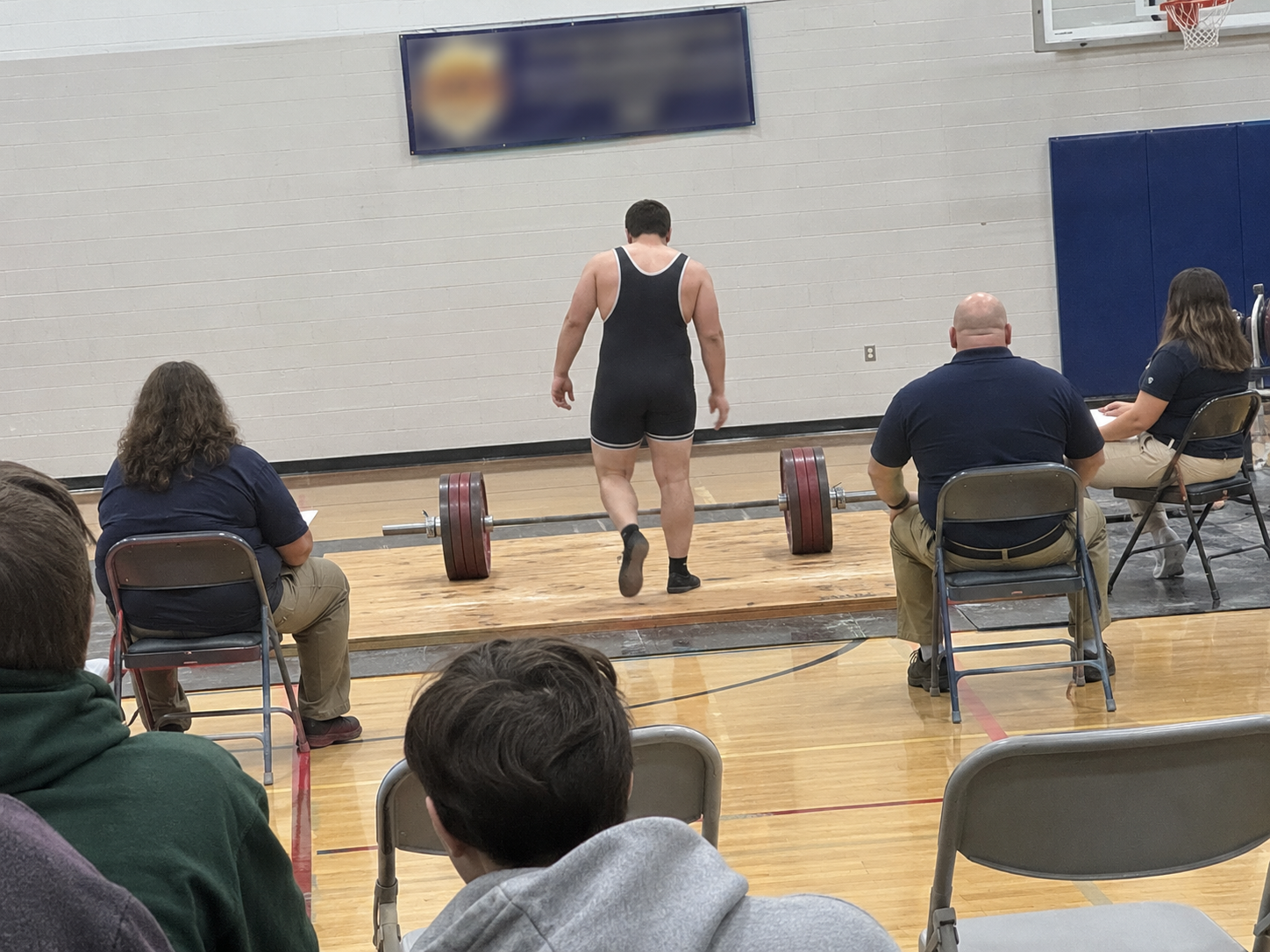
How the plan is built
Pick the lift, enter the third attempt you plan to take, and choose a plan style. The calculator works backward from that number to give you an opener and a second attempt, rounded to your plate step. The default step is 2.5 kg, or 5 lb.
The standard plan is coaching guidance, not a rule:
- The opener is about 91% of your planned third.
- The second attempt is about 95.5% of your planned third.
- Both are rounded to your step. Halves round up.
Those numbers are midpoints of the ranges coaches give: 90 to 92% for the opener and 95 to 96% for the second.
For a squat with a planned third of 200 kg and a 2.5 kg step, the standard plan is:
| Attempt | Weight |
|---|---|
| Opener | 182.5 kg |
| Second | 190 kg |
| Third | 200 kg |
Conservative and aggressive plans
Plan styles change the size of the jumps.
- Conservative: smaller jumps, about 3 to 5% of the bar load.
- Standard: the midpoint plan above.
- Aggressive: bigger jumps, about 6%, with a larger first jump.
Coach method B
Another method works from an estimated max, not a planned third. Openers sit at 90 to 94% of the estimate, seconds at 96 to 100%, and thirds at 100 to 104%. It is shown as an alternative so you can compare it with the standard plan. If you use it, your estimated max should come from a recent hard set or a tested max, not a hopeful guess.
Why openers should be easy
An opener is the attempt you must make. Missing it costs you a lot, because the rest of that lift depends on it. Coaches suggest an opener that feels easy, roughly RPE 7 to 8. That means you could hit it for a few more reps.
The second attempt is a step up that still feels solid, around RPE 8 to 9. The third is where you reach, at RPE 10 or for a personal record.
RPE is a scale of effort from 1 to 10, where 10 is the heaviest you can lift once. These ranges are coach guidance, not rules, and your own training shapes them.
What the data say
Third attempts are missed far more often than first attempts. This table shows the share of attempts that were good lifts, among raw competition lifters, built from OpenPowerlifting data.
| Lift | Attempt 1 | Attempt 2 | Attempt 3, all | Attempt 3, men | Attempt 3, women |
|---|---|---|---|---|---|
| Squat | 88.3% | 83.5% | 66.1% | 66.4% | 65.6% |
| Bench | 91.6% | 80.3% | 47.4% | 48.4% | 45.5% |
| Deadlift | 95.1% | 88.4% | 62.1% | 59.5% | 67.2% |
The bench third is the hardest. Fewer than half of them are good lifts. Squat and deadlift thirds are made about 62 to 66% of the time among all lifters.
Use these as a reminder to keep your opener and second safe. A strong opener and second set up your third.
Meet basics
A few points to know before your first meet:
- Lifts go in the order squat, bench press, deadlift, with three attempts on each.
- Three judges score each lift. Two of three white lights is a good lift.
- Rules on handing in and changing attempts differ by meet, so check yours.
- Weigh-in windows differ by federation. Some weigh in about two hours before, others a day before.
- Rules about equipment, commands and clothing vary, so read your federation’s rulebook.
Check the rulebook for the meet you enter. Meet rules change, and this page does not replace them.
Printing your attempt card
The planner makes a card with your opener, second and third for the lift you picked. Print it and take it to the meet. Make one for each lift.
When to use a different plan
The standard plan fits most lifters with a clear target. If you are returning from an injury, new to meets, or unsure of your max, a conservative plan is the safer pick. If you have a stronger recent history and want a bigger third, an aggressive plan lets you step up faster.
This calculator does not suggest tactics based on other lifters. Plan against your own numbers.
Questions
How do I choose my powerlifting attempts?
Start from the third attempt you believe you can make on a good day. Set the opener at about 91% of it and the second at about 95.5%. Round to your plates. Choose an opener you could hit for a clean single even on a bad day, and keep the third for a number that is realistic.
What percent should my opener be?
The standard plan sets the opener at about 91% of your planned third, the midpoint of the 90 to 92% range coaches commonly give. Another method, based on an estimated max, puts openers at 90 to 94%. Easy openers protect you from bombing out.
How often do lifters miss their third attempt?
Often. Among raw competition lifters, 66% of squat thirds, 47% of bench thirds and 62% of deadlift thirds are good lifts. That means about one in three squat thirds is missed and more than half of bench thirds. Plan the third as a stretch, not a certainty.
How big should my jumps be between attempts?
A conservative plan uses jumps of about 3 to 5% of the bar load. An aggressive plan uses about 6%, with a bigger first jump. The standard plan sits between them. Smaller jumps raise the chance that your third is a number you can lift.
What happens at my first meet?
You weigh in, then lift in the order squat, bench, then deadlift. You get three attempts per lift. Three judges decide each lift, and two of three white lights is a good lift. Weigh-in windows differ by federation, so check the rulebook for yours.